

How Do Leading Manufacturers Deploy Robotics While Maintaining Full Production Capacity?
Manufacturers recognise the value of robotics and automation in boosting efficiency and output, but many fear the operational disruption that comes with implementation. Downtime during technology rollouts can hurt production capacity and revenue.
However, leading manufacturers have proven that strategic, phased deployment makes it possible to integrate advanced automation while maintaining full production capacity.
Why Manufacturers are Investing in Robotics
Historically, manufacturers have always been at the forefront of robotics adoption. They continue leading today with smart manufacturing initiatives that deliver measurable results. The scale of these investments reflects strong confidence in returns.
In 2021 alone, US manufacturers were responsible for nearly 75% of all capital expenditures on robotic equipment. Year over year, these capital investments increased by 73.6%. Clear financial incentives drive manufacturers to invest in robotics and automation technology, creating immense market momentum.
Many manufacturers report significant operational and financial benefits from smart manufacturing initiatives. Automation can increase profits, as productivity and efficiency boost sales and customer satisfaction. Early-stage implementation can also increase production output by 5.1%, helping companies maintain and improve capacity during deployment.
A Blueprint for Low-Disruption Deployment

Smart manufacturing initiatives can unlock up to 15% additional capacity, according to Deloitte’s 2025 Smart Manufacturing and Operations Survey. However, most respondents allocated over 20% of their total improvement budget toward these projects. The good news is that strategic deployment can reduce both capital expenditure and operational disruption.
By following this blueprint, manufacturers can integrate robotics and automation technology without hurting production capacity.
Start With One Production Line
A pilot project allows manufacturers to focus on a single, high-impact but low-risk area to test and validate technology and workflow. Implementing it in stages helps iron out issues and optimise efficiency before a company-wide rollout. Manufacturers can concentrate on a single production line to validate integration with existing systems. Key metrics to track during pilots include utilisation rate, system integration performance and workforce adaptation speed.
Add Equipment Before Overhauling
If space and budget allow, manufacturers should add new equipment before overhauling existing systems. This approach increases production capacity and efficiency, offsetting downtime. They can run legacy and new systems in parallel during transition periods to maintain output.
Work Around Off-Peak Hours
Decision-makers can schedule training and installation during off-peak hours to avoid interruptions during peak production. This way, they can maintain full daytime production while progressively building out automated systems. Performing installations, testing and calibration during nights, weekends or scheduled maintenance windows prevents impact on live shifts.
Leverage a Zero-CapEx Financing Model
Manufacturers can pay for services, infrastructure and assets on a subscription or pay-as-you-go basis rather than buying them up front. This zero-CapEx financing model helps them avoid large capital expenditures and preserve cash for core activities.
By turning substantial capital investments into predictable monthly costs, they improve their cash flow and enable rapid scaling. For those concerned about budget constraints, this financing model removes the primary barrier to automation adoption.
Schedule Employee Training
Training, clear communication and involving experienced employees early in the process are critical for successful adoption. Getting them accustomed to changes before a company-wide rollout can help reduce resistance and build confidence.
When workers have the knowledge and tools to succeed, transitions go more smoothly. Organisations should include hands-on training sessions during the pilot phase so they can troubleshoot issues and develop best practices before full deployment.
What Is Next For Low-Disruption Automation?
Advanced technology is becoming more accessible to enterprises of all sizes. As modern robotics and automation technology become more common, interoperability becomes a greater concern. Forward-thinking manufacturers should consider investing in modular, configurable and custom-built solutions to make tomorrow’s integrations more seamless.
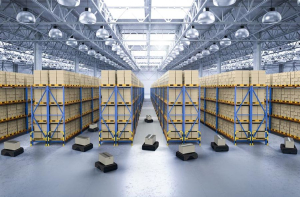
Many application-ready automated robots already exist. Take the iNcaart for example, which is a configurable autonomous vehicle. Its base supports a broad range of modules and attachments, including fully custom-built solutions. Since it is engineered for rapid deployment, manufacturers can easily integrate it into technology-dense factory floors.
This autonomous mobile vehicle represents a prime example of flexible, intelligent automation that can be trialled and integrated with minimal disruption. Real-world trials are currently underway for similar technologies, which aim to reduce non-value-adding movement and improve efficiency in industrial environments.
The trend toward broader adoption is accelerating. In North America, robot orders increased by 6.6% in 2025, totalling 36,766 units valued at $2.25 billion. As automation technologies including autonomous mobile systems continue to prove their value in pilot programs and live production environments, more manufacturers will gain access to low-disruption solutions that deliver immediate returns.
Automate Without Hurting Production Capacity
Implementing robotics is not an all-or-nothing event. By focusing on low-disruption tactics like off-peak installations and zero-CapEx financing models, manufacturers can integrate automation without sacrificing output. Preparing the workforce through early training and pilot programs assists in smooth adoption.
Those who take this measured approach unlock efficiency gains while maintaining the schedules that keep their businesses running.
By Lou Farrell, Senior Editor at Revolutionized Magazine.